

1) STROKE - A Medical Emergency
When a person is having a stroke its a Medical Emergency, every second counts. And what you do in those critical moments can potentially help save someone’s life.
REMEMBER FAST
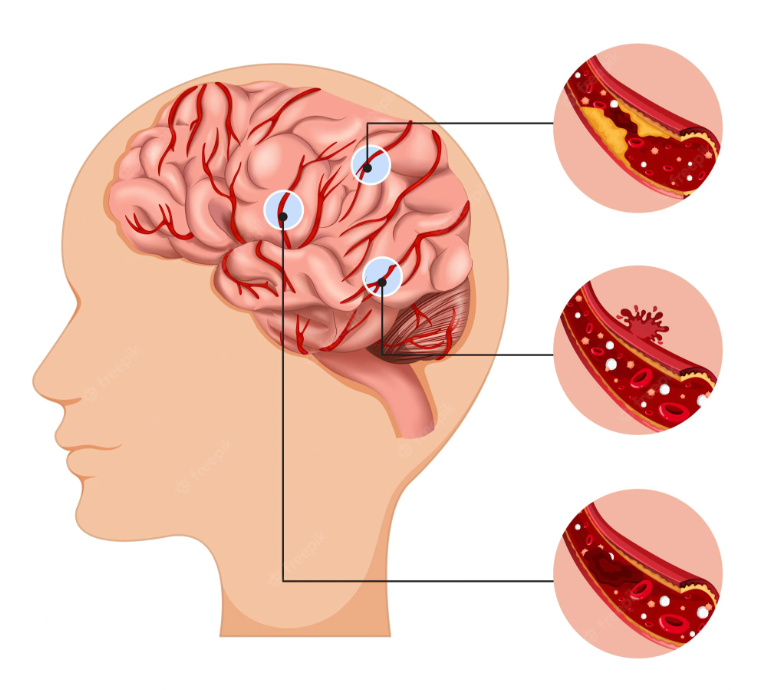
- F - Face drooping. One side of the face drooping is a sign of a stroke.
- A - Ask the person to lift both arms. If one arm is weaker and drifts down, they may be having a stroke.
- S - Slurred speech or difficulty talking coherently may be a sign of stroke. Say a simple sentence like: "The sky is good today." If the person has trouble repeating it, they may require medical attention.
- T - When someone is having a stroke, time is of the essence. If you suspect a stroke, get medical attention right away.
Things not to do :
1. Do not let that person go to sleep
2. Do not give any food or drinks
3. To be safe do not give any medication
2) UNCONSCIOUS - A Medical Emergency
First aid is the immediate care a sick or injured person gets. In some cases, it may be
the only care a person needs. In others, first aid is a way to prevent a person's
condition from worsening and keep them alive until paramedics arrive or they are
taken to the hospital.
What to Do :
If someone is unconscious or unresponsive, the basic principle of first aid that you need to know is ABC: airway, breathing, and circulation.
i) Airway: If someone’s not breathing, the first thing you need to do is clear their airway.
ii) Breathing: If you have cleared a person’s airway but they’re still not breathing, provide Mouth-to-mouth resuscitation (breathing). 30 chest compression 2 rescue breath.
iii) Circulation: As you are doing mouth to mouth breathing, perform chest
compression to keep the person’s blood circulating. If the person is breathing but is not responsive, check their pulse. If their heart has stopped, provide chest compression.
3) CARDIAC ARREST - A Medical Emergency
Cardio pulmonary resuscitation (CPR) is one of the most important emergency
medical procedures that a person can know. If a person’s heart is not beating, they could die. When a person is in cardiac arrest doing CPR.
What to Do:
i) Find a person nearby. Make eye contact, point to them, and say: “Call 108”
ii) Start doing chest compressions on the person who needs help. Using both your
hands, push down hard and fast in the center of the person’s chest. Let their
chest come back up naturally between compressions. Keep going until someone
with more training arrives.
iii) IF your trained in CPR you can use chest compressions and rescue breathing.
4) BURN
The first step to treating a burn which is a Medical Emergency is to stop the burning process.
This might mean:
a) Cleaning up chemicals
b) Turning off electricity
c) Cooling heat with running water
d) Covering up or taking a person inside out of the sun
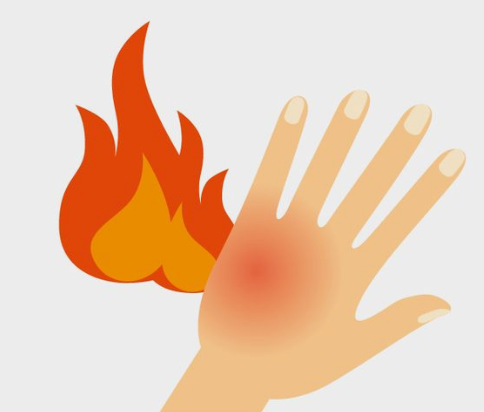
The severity of a burn is based on how deep in the skin it is and how big it is:
a) First-degree burn: This kind of burn only affects only the outer layer of skin and causes redness and swelling. It is considered a minor burn.
b) Second-degree burn: This kind of burn affects two layers of skin and causes blistering, redness, and swelling. It is considered a major burn if it’s more than three inches wide or is on the face, hands, feet, genitals, buttocks, or over a major joint.
c) Third-degree burn: This kind of burn affects deeper layers of skin and causes white or blackened skin that can be numb. It is always considered a major burn.
What to do
Major burns need emergency medical attention. Once you’ve stopped the burning process, call 108 or get someone else to.
For burns that are not an emergency, you can take these first aid steps :
- Flush the burned area with cool running water for several minutes. Do not use ice.
- Apply a light gauze bandage. If the burn is minor, you can put on an ointment, like aloe vera, before you cover it.
- Take Motrin (ibuprofen) or Tylenol (acetaminophen) for pain relief if you need it.
- Do not break any blisters that form.
5) FRACTURE
Any injury to your limbs, hands, and feet needs to be treated as a broken bone until an X-ray can be done.
Call 108 if:
i) The person is bleeding a lot, is unresponsive, is not breathing, or has more than one injury.
ii) You think a person has a fracture or other serious injury in their spinal column, head, hip, pelvis, or thigh. In this case, do not move the person.
iii) A broken bone is poking through the skin (open or compound fracture)
Otherwise, you can use first aid, then go to urgent care or contact your
healthcare provider for guidance.
Here’s what to do next:
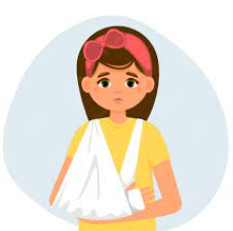
- For a limb, use a splint and padding to keep it still, then elevate it.
- Do not try to straighten the bone.
- Put a cold pack on the injury—but not directly on the skin. Use a barrier between the ice and the skin to keep the tissue from being damaged. If all you have is ice, put it in a plastic bag and wrap it in a shirt or towel before applying it.