

Diastasis recti is a common condition in pregnant and postpartum women.
The rectus abdominis runs vertically along the front of your stomach.
What is Diastasis Recti?
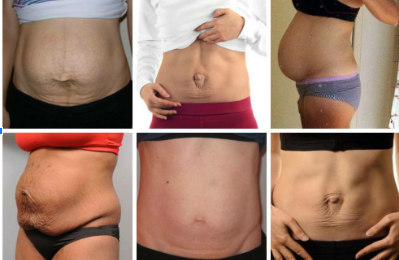
It's frequently referred to as someone's "six-pack abs." It's divided into left and right sides by a band of tissue called the linea alba that runs down the middle.
As your uterus expands during pregnancy, the abdominals are stretched and the linea alba thins and pulls apart.
This separation can make a person's belly stick out or bulge months or years postpartum.
Once you deliver your baby, the linea alba can heal and come back together. It's highly elastic and retracts backs (like a rubber band). When the tissue loses its elasticity from being overstretched, the gap in the abdominals will not close as much as it should. This is diastasis recti.
How common is diastasis recti?
- Affects 60% of people & usually resolves itself within 8th weeks of delivery.
- About 40% of those who have diastasis recti still have it by 6th months postpartum.
How to do DRA Self-Exam?
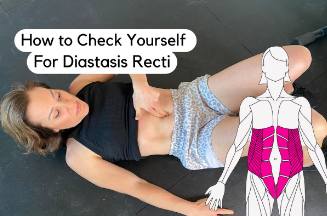
- Lying on your back and feeling between your abdominal muscles around your belly button.
- If you notice a depression and separation between the muscles, you may have DRA.
- If so, consult your doctor for a referral to a physical therapist who can provide a treatment protocol.
What are Common signs of Diastis Recti during the postpartum period are?
- A visible bulge or "pooch" that protrudes just above or below the belly button.
- Softness or jelly-like feeling around your belly button.
- Coning or doming when you contract your ab muscles.
- Difficulty lifting objects, walking or performing everyday tasks.
- Pain during sex.
- Pelvic or hip pain, Low back pain.
- Poor posture.
- Urine leaking when you sneeze or cough.
- Constipation.
- Feeling weak in your abdominals.
Which movements make diastasis recti worse?
Any movement that bulges the abdominal wall forward can cause more damage to your diastasis recti.
These exercise movements should be avoided if you have diastasis recti :
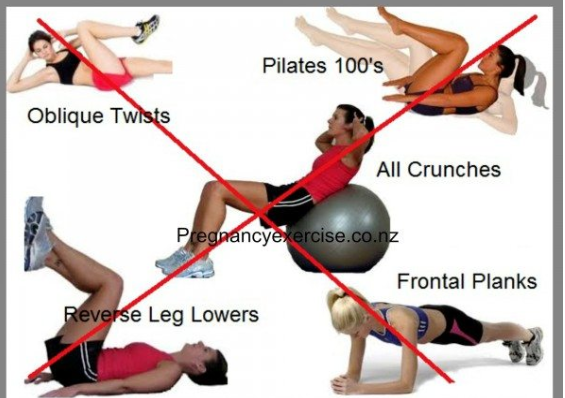
- Crunches or sit-ups of any kind.
- Planks or push-ups (unless using modifications).
- Downward dog, boat pose and other yoga poses.
- Double leg lifts, scissors and other Pilates moves.
- Any exercise that causes your abdominals to bulge, cone or dome.
PREVENTION of DIASTASIS RECTI
- Healthy weight gain during pregnancy
- Proper posture and deep breathing
- Safe core exercises
- Don't strain while lifting
- Log roll when getting out of bed
Is it too late to fix my diastasis recti?
It's never too late to repair your diastasis recti. With the proper exercises, you can fix your ab separation years after you've delivered your last baby.
How to fix diastasis recti?
- Rebuilding your core from the inside out.
- Strengthen the transverse abdominis (TVA) muscle,
- CURA ADVANCED PHYSIOTHERAPY involves a group of supportive, co-operative motivated, independent and certified Physiotherapists who are able to carry out all above-mentioned treatment. Here treatment is planned according to the female’s assessment and focusing on patients well begin. Improving overall patients’ quality of life is the main goal of Physiotherapist at Cura Advanced Physiotherapy.
