

Covid-19 affects lungs, causing breathing difficulties. Diaphragmatic, pursed lip, and humming/bhramari pranayama breathing exercises improve lung health.
In the recent past years and even today, more than half the population worldwide is suffering from the Corona Virus pandemic; a.k.a. Covid-19. This virus goes deeper than viruses like the common cold.
If your immune doesn’t subdue Covid-19 in the first 7-10 days, it moves down to your LUNGS. This causes the inflammation of lungs, making it difficult to breath normally.This can lead to pneumonia, other acute respiratory diseases and/or cause lasting harm to the lungs and other organs.
How Can You Revive Your Lungs by breathing exercises ?
While recovering from corona virus, you may find that you get breathless regularly. You might also have a tight feeling in your chest and find yourself getting tense.It occurs due to the decrease in the oxygen supply to the body.
Deep breathing can help restore diaphragm function and increase lung capacity. The goal is to build up the ability to breathe deeply during any activity, not just while at rest.
When we take deep breaths, the upward and downward movement of the diaphragm helps remove the toxins from the body promoting better blood flow.Due to increased blood flow, we get more oxygen into our blood. Increased oxygen results in increased energy levels.
Types of Breathing exercise :
- Diaphragmatic (also called as Deep/Belly) Breathing
Diaphragmatic breathing is a type of breathing exercise that helps strengthen your diaphragm, an important muscle that helps you breathe.
Technique :
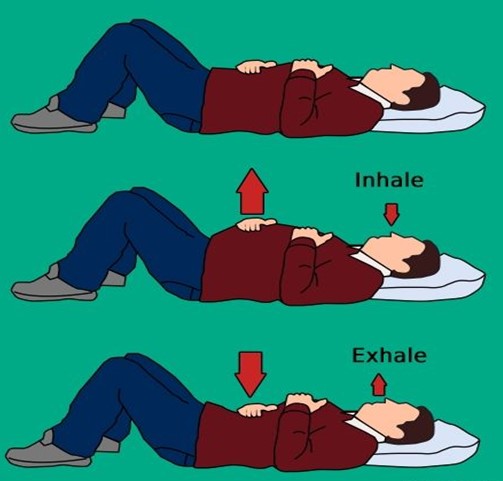
- Lie on your back and bend your knees so that the bottom of your feet is resting on the bed.
- Place one hand on your upper chest and the other on your belly, just below your rib cage.
- Breathe in through the nose and pull the air down into your stomach where your hand is. The hand on your chest should remain still, while the one on your belly should rise.
- Tighten your abdominal muscles and let them fall inward as you breathe out through pursed lips. The hand on your belly should move down to its original position.
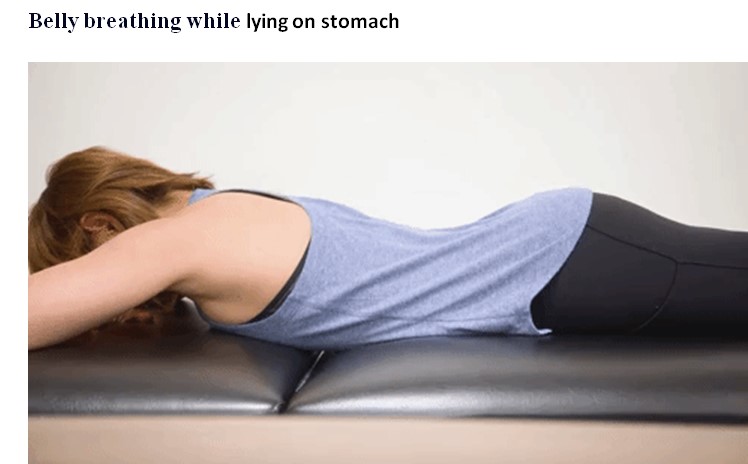
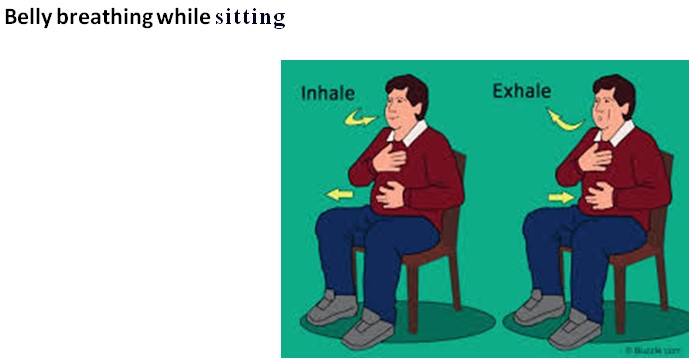
One of the biggest benefits of diaphragmatic breathing is reducing stress.Being stressed keeps your immune system from working at full capacity. This can make you more susceptible to numerous conditions.
Over time, long-term or chronic stress — even from seemingly minor inconveniences like traffic — can lead to anxiety or depression.
2. Pursed Lip Breathing
Pursed lip breathing is a breathing technique designed to make your breaths more effective by making them slower and more intentional.
Technique :
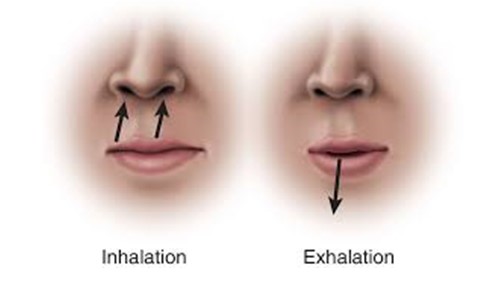
- Inhale through your nose for two seconds, feeling the air move into your abdomen. Try to fill your abdomen with air instead of just your lungs.
- Purse your lips like you’re blowing on hot food and then breathe out slowly, taking twice as long to exhale as you took to breathe in.
- Then repeat. Over time, you can increase the inhale and exhale counts from 2 seconds to 4 seconds, and so on.
3. Humming / Bhramari Pranayama
Humming while exhaling helps increase nitric oxide production in the body. Nitric oxide helps with neural building and repair of the nervous system and it dilates blood vessels, enabling more oxygen to be delivered throughout the body.
Humming is also calming and soothing, it reduces stress and it can help the patient remain in restoration mode
Technique :
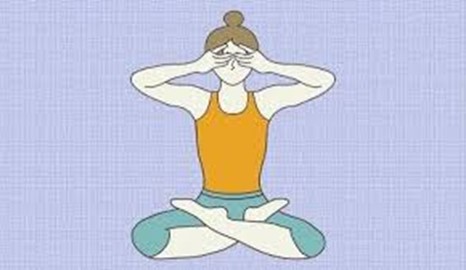
- Sit up straight in a quiet, well-ventilated corner with your eyes closed.
- Keep your eyes closed for some time. Observe the sensations in the body and the quietness within.
- Place your thumb on your ears on the cartilage. Cover your eyes with your middle and ring finger.
- With your lips closed and your tongue on the roof of your mouth, breathe in through your nose and pull air down into your stomach.
- Once your lungs are full, keep your lips closed and exhale while humming, making the “hmmmm” sound.
- Again, inhale through your nose, then exhale through your nose while humming
- Breathe in again and continue the same pattern 3-4 times.
Simple humming in relaxed mode lowers the blood pressure and insulin resistance. The unique sensation of this yoga breathing practice helps to create instant calm and is especially soothing around your forehead. This humming bee breath is practiced to relieve frustration, anxiety, and anger.
PRECAUTIONS
Do not begin exercises if :
- You have any shortness of breath or difficulty breathing while resting
- You have any chest pain or palpitations (“fluttering” of the heart in the chest)
- You have new swelling in your legs.
STOP exercise immediately if you develop any of the following symptoms :
- Dizziness
- Shortness of breath more than normal
- Chest pain
- Excessive fatigue
If you want to conquer the anxiety of life, live in the moment, live in the breath.
References
- healthline/health/breathing-exercise
- physio-pedia/Diaphragmatic Breathing Exercises
- wakefit/blog/bhramari-pranayama yogasleep